
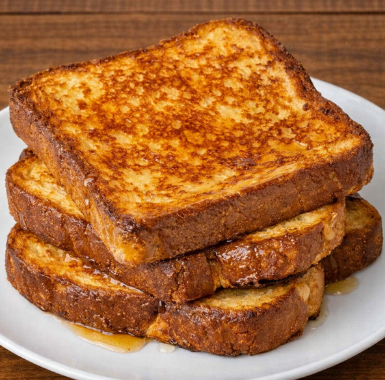
Thick-Cut Brioche French Toast
I’ve made a lot of french toast over the years, and I’m telling you right now… the bread matters more than people think. You can have the best batter, the best toppings, the prettiest plate, and if the bread is wrong, the whole thing turns into a sad, soggy mess. That’s why I’m picky about using brioche for our french toast at my brunch cafe here in Orlando.
Brioche just has this soft, buttery thing going on that regular bread can’t touch. It’s rich, but it doesn’t taste heavy. It’s a little sweet on its own, so you don’t have to drown it in syrup to make it taste like something. And when it hits the griddle, it gets that golden outside that makes you want to break into it right away.
We slice ours thick on purpose. Not “kinda thick,” not “two slices stuck together thick.” I mean thick-thick. The kind that actually holds up when it gets dipped. If you’ve ever had thin french toast that fell apart the second your fork touched it, you know what I’m talking about. Thick slices give you that soft center, but the outside still gets cooked right. You get a bite that feels like it has layers, not just mush.
Brioche works better than other breads for a couple reasons I’ve learned the hard way. Regular white bread is just… too light. It soaks up the batter fast, then collapses. It goes from “french toast” to “wet sponge” in about thirty seconds. Wheat bread has its place, but for french toast it can taste kind of dry and grainy, and it doesn’t get that smooth, custardy middle. Sourdough can be fun if you like a tangy bite, but it changes the flavor a lot. Some people love it. Some people take one bite and look confused, like they weren’t ready for that sour hit at breakfast.
Brioche doesn’t fight the batter. It works with it. The bread is already tender, so it drinks up the custard without turning into paste. And that little bit of butter in the bread helps it brown up in a way that looks and tastes right. You get those crispy edges, the warm center, and it still feels like actual toast when you cut into it.
I remember testing different breads one week and thinking, “How different can it really be?” Yeah… it was different. One day we used a basic loaf just to see, and I swear the slices came off the griddle looking flat and tired. Brioche came right after, and it was like the plate suddenly looked like brunch again. Bigger, softer, better color, better smell. You could taste the difference without me having to explain it.
And let’s talk texture for a second, since that’s the whole point. Brioche french toast should feel soft and warm inside, with the outside cooked enough that it doesn’t fall apart. It should hold syrup, whipped cream, fruit, whatever you’re into, without turning into a puddle. I want you to be able to take your time eating it. No rushing before it falls apart.
If you’ve been ordering french toast and feeling like it’s always either too dry or too soggy, it might not be the cook’s fault. It might just be the bread. Brioche gives you that sweet spot where it tastes rich but still feels like breakfast, and when it’s thick-sliced, it eats like a real meal instead of a snack pretending to be brunch.
If you’re in Orlando and you want french toast that actually feels worth it, brioche is the move. One bite in and you’ll get why I stick with it. It’s the kind of breakfast that makes you slow down for a second and go, “Okay… yeah. This is the one.”